Wednesday, 20 April 2022

Book Review: “Revisiting Targeting in Social Assistance: A New Look at Old Dilemmas”


The World Bank has just published its latest thriller, “Revisiting Targeting in Social Assistance: A New Look at Old Dilemmas”. The tone is set by the name. Using a pivotal colon as in “Frankenstein: or the Modern Prometheus”, “2001: A Space Odyssey” or “Chapterhouse: Dune”, the new book continues this tradition of futuristic science fiction, set in a dystopian fantasy world. And the use of the gerund in its short form, “The Revisiting” (as it is already becoming known to its cult followers), deliberately echoes the psychological horror genre of “The Shining”, “The Awakening”, “The Haunting” and “The Reckoning”. Weighing in as it does at 578 pages, the Bank’s new mythopoeia falls, in terms of its length at least, somewhere between JRR Tolkein’s “The Fellowship of the Ring” and JK Rowling’s “Harry Potter and the Deathly Hallows”. Fortunately, like both of these precursor tomes, it is a riveting page-turner, with a myriad of mythical creatures, magical illusions and richly-imagined villains leaping out of each page.

Without wishing to spoil the plot for avid World Bank neophytes, the story revolves around an elite cadre of superior beings, who are plucked out of society, transported to the Capitol (echoes here of the “Hunger Games”), and subjected to some kind of collective brainwashing (the exact nature of which is never clearly explained). They are then trained in an arcane science to become “Technical Experts: Selecting Targets Of Social Transfers & Emergency Response” (TESTOSTER). Based on this acronym, the members of this privileged cabal are thenceforth known by the moniker of the “TESTOSTER-Ones”.

The Testoster-Ones are given extraordinary powers of life and death over their fellow beings: they literally choose which of the lesser humans survive and which do not. Over the years, ordinary folk become their playthings and the guinea-pigs of their cruel experimentation. After explaining the rituals of their induction, the rest of the book gradually reveals the evolution of the increasingly savage and sophisticated methods that the Testoster-Ones apply in their arbitrary selection of who should live and who should die.

Early approaches were relatively straightforward. The Testoster-Ones would simply select by geographical region: inhabitants of one area would be humoured with token support, whilst others would be abandoned to their fate. Later variants of this were to select on the basis of ethnicity, political allegiance or age: all members of a particular tribe, all supporters of a particular party, or all people within a certain demographic could be allocated, or deprived of, a particular favour.

Another early favourite was to encourage self-selection through slavery: all those who were prepared to work for the Testoster-Ones – breaking stones, digging pits, building temples, constructing roads and so on – were given the minimum wherewithal to eke out a living; all others fell by the wayside. Later refinements to this approach encouraged greater participation of women in such excessively physical tasks, or reduced the pittance paid to well below the bare minimum required for survival. The slavery approach, euphemistically referred to as “public works”, was also sometimes combined with another early favourite: that of a public lottery where the winners survived and the losers were consigned to the dogs. Or it was replaced by a particularly pitiless version of self-selection where potential beneficiaries were only offered food that was unacceptable to the vast majority of them, such as crushed insects or diced worms.

Later selection procedures drew their inspiration from the post-apocalyptic nation of Panem, where, for the 25th Hunger Games, each district had to choose its own “tributes” (where a “tribute” is a nominee selected to fight to the death). Such “community-based” targeting offered the convenient illusion that it was not the Testoster-Ones making the selection, but rather mere mortals sending one another to their death. Problems encountered with this approach included the fact that the mortals often preferred not to make a selection at all, and that – if they did – they very often selected the weakest and most marginalised to be sacrificed.

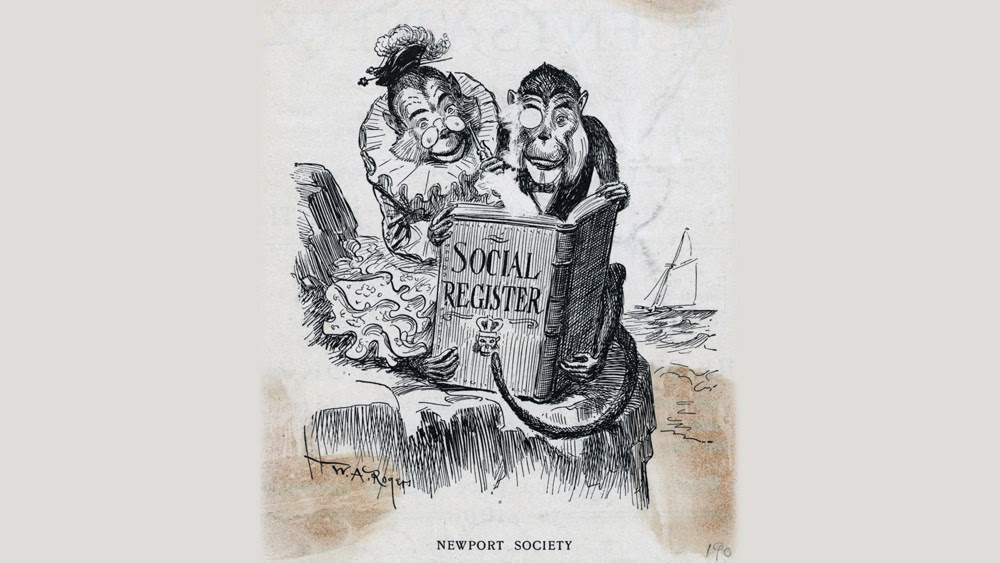
The Testoster-Ones’ art of destiny-determination reached its apogee of refinement with the so-called “PMT” (mysteriously only ever referred to by its sinister initials – but perhaps denoting “Perfected Mechanism of the Testoster-Ones”?). Described in the book as “a more complex and opaque…inference-based assessment”, this generates a seemingly arbitrary selection of individuals, ostensibly based on predicted weights from a statistical model generated by computer, thereby bestowing a convincing veneer of scientific authenticity. The exact formulas used for the targeting are never revealed, but the reader is provided with a number of tantalising glimpses of the kind of variables that underpin their obscure equations: sex features prominently, whether the person owns an odd or even number of chickens, which element their roof is made of, the colour of their hair, the cooking fuel they use, their energy source… From this witches’ cauldron (euphemistically referred to in the book as a “social registry”) emerge the secret lists on which the Testoster-Ones’ subsequent selection of survivors is based.

The book concludes with a tantalising glimpse of the future, and offers hints that future random decision-making will be handed over to “big data” and “machine learning algorithms”, perhaps signifying an end to the Testoster-One era as we know it. As the book intimates: “Changes in technology and the availability of new data always excite hope that these will make targeting more accurate or easier”. Exciting stuff, indeed!

Although a compelling story, “Revisiting” suffers from one key short-coming. While the Testoster-Ones are roundly portrayed in all their magnificent finery and disdainful arrogance, the rest of the human race (their subjects, if you like) are depicted rather one-dimensionally. They do not come across as having individual characters or any degree of agency. They accept their destiny with a kind of resigned fatalism. Nor does the book go into much detail about the impact of the Testoster-Ones’ choices on these poor “huddled masses”: the fact that the system encourages them to deceive, imposes stigma on them, deprives them of dignity, creates perverse incentives, corrodes public morality, undermines social cohesion and sets one person against another to survive.

By the end, the reader rather wishes that the mass of mortals would come together, would rise up in popular protest against the Testoster-Ones, would rebel against their obvious abuses or would claim some basic human rights even in their capacity as subservient beings. One longs for the emergence of a Catniss, a Frodo or a Hermione to lead an insurrection against the callous cruelty of the cabal. There are occasional hints of this, but it doesn’t happen, even though it would have perhaps allowed a more balanced representation of the dichotomies between good and evil, rational and irrational, power and impotence. But, then again, perhaps this is a subject-matter that will be explored more fully in the next thrilling sequel: “The Revisiting Revisited”. We can only hope so!

Tuesday, 30 November 2021

The Pleonasm of Shock-Responsive Social Protection

The original version of this blog appeared on Development Pathways

Three Christmases ago, I wrote a blog post about all the oxymorons involved in social protection! I refrained from naming names, but I provided a number of examples of commonly used phrases that were oxymoronic.

An oxymoron, as a reminder, is a phrase that is inherently self-contradictory: “deafening silence”, “painfully beautiful”, “open secret”, to name but a few. In social protection, we happily talk about “productive safety nets”, “conditional social protection”, “graduation from poverty”, “poverty-targeting” and “progressive universalism”, which are all examples of oxymorons, for reasons that I explain in the earlier blog.

Today, as Christmas again approaches, I turn my attention to the use of another literary device in social protection: the pleonasm. The word pleonasm, like oxymoron, has Greek origins: it comes from the Greek word πλεονασμός (pleonasmos), which means “excess”. A pleonasm is a redundancy, where part of the phrase adds nothing to the sense. As with oxymorons, there are many examples of pleonasms in common parlance: “advance planning”; “close proximity”; “free gift”; “false pretences”; and so on. There are also some fine examples in literature: Shakespeare’s “This was the most unkindest cut of all”; or Isabel Allende’s “These terrible things I have seen with my own eyes, and I have heard with my own ears, and touched with my own hands”.

“Shock-responsive social protection” is a pleonasm. If social protection is not shock-responsive, then it is not social protection. By any definition, social protection is there to respond to shocks, whether they be lifecourse vulnerabilities (being born; growing old; becoming disabled), individual misfortunes (loss of livelihood; illness or injury; death of a family member), or extensive crises (natural disasters; climate change; conflicts; pandemics).

I challenge you to find a definition of social protection that does not include the notion of it responding to shocks and vulnerabilities. From the Organisation for Economic Co-operation and Development’s “Social protection refers to policies and actions which…enable [people] to better manage risks and shocks”, through the International Monetary Fund’s “Social protection…aims at protecting households from shocks” and the European Union’s description that it “enhance[s] the capacity of all people…[to] better manage risks and shocks”, to the World Food Programme’s text that says it “consists of policies and programmes designed to protect people from shocks and stresses throughout their lives” and Australian Aid with their “prevention against income shocks and drops in well-being”: all include this essential element. Therefore, there is no need to add the tautological descriptor “shock-responsive” to the term “social protection”: it is redundant.

Yet “shock-responsive social protection” is the flavour of the month. Everybody’s doing it! Why might that be? Please allow me a bit of pre-Yuletide speculation. I suspect that there are at least three under-currents at play, all of which have been accelerated by the impact of COVID-19.

  • Humanitarians leaping on the social protection bandwagon – Humanitarian actors see this as a key entry point to broader social protection, a Trojan horse to jump the so-called “nexus” between humanitarian and development assistance. Such actors have a clear mandate for emergencies, so if social protection needs an explicit shock response component, then who better than they to provide it? There is an understandable, even existential, imperative of self-preservation here. As national governments increasingly recognise the value of delivering comprehensive, inclusive protection against life-course vulnerabilities, so the resilience of the population will increase, the need for ad hoc emergency response will diminish and the importance of non-government players in its implementation will reduce.

  • Academia grabbing at a new plaything – Institutes, researchers, consultants and the like are only too delighted to have a new subject to dissect, a new expertise to vaunt, a new topic for webinars, a new module to add to their training courses. The literature has been filled with learned volumes on shock-responsive social protection, building new frameworks that involve excitingly arcane concepts such as “shadow alignment”, “piggybacking” and “design tweaking”. COVID-19 has clearly shown the need for “horizontal” and “vertical” expansion, it is true. But good social protection should provide that anyway: a mother gets a higher benefit when a new child is born; more people receive unemployment benefit during depressions or lockdowns; and the coverage of a social pension will increase as a country’s population ages.

  • Poverty-targeters throwing their toys out of the pram – The third strand is that previous advocates of restricted poverty-targeted “safety nets” (which they have hitherto been disingenuously calling “social protection”), have been rudely alerted to the reality that what they are offering is not social protection. COVID-19 has cruelly revealed the weakness of discretionary programmes with limited coverage, restricted systems, weak political traction and inadequate domestic financial support. But rather than admit this, such players would prefer to imply that the problem lies not with their model of social protection, but rather with the fact that it is not “shock-responsive” enough. However, the problem with poverty-targeted safety nets is not that they are not shock-responsive, but that they are not social protection.

You have probably heard me say something like this before, with your own ears, or read it with your own eyes; and you are pensively thinking in your minds that “this is Groundhog Day, déjà vu – all over again!”. And you would be absolutely bang-on right and correct. But let’s not veer waywardly off course and get distractedly preoccupied with shock-responsive social protection. Let’s rather focus on what really matters: socially protective social protection that does what it is meant to do (which includes delivering the best possible response to shocks!).

Happy Christmas!

Tuesday, 22 June 2021

Social registry...or regular sophistry?


The original version of this blog appeared on Development Pathways

Stephen Kidd’s recent paper sets out very clearly the problems associated with the use to which social registries are commonly put: poverty targeting of social assistance, primarily through proxy means testing. I agree with many of his misgivings. But I have an even more fundamental concern about the concept of a “social registry”: what is it intended to be a registry of?

A registry is defined as “an authoritative list of one kind of information” (Wikipedia); “an official or authoritative book of records”(OED), “a collection of all the official records relating to something” (Chambers). To be useful and truly “authoritative”, a registry must be accurate and comprehensive, ideally exhaustive. So a land registry is a record of the ownership of all plots of land; a driver and vehicle licensing registry is a list of all licensed vehicles and of all those holding a license to drive them; Lloyd’s register is (and has been since 1764!) a list of all seagoing, self-propelled merchant ships of 100 gross tonnes or greater; a domain name registry is a complete list of registrants of all allocated Internet domains; and a civil registry (as discussed in Stephen’s paper) is a comprehensive recording of all births, marriages and deaths in a country. If such registries are incomplete or outdated or inaccurate, they cease to be authoritative, so they are not registries.

On this basis, and in the context of social protection, I can understand that a beneficiary registry is a list of all beneficiaries of a social protection programme; by extension that an integrated (or unified) beneficiary registry is a combined registry of beneficiaries of multiple social protection programmes; and even – though perhaps this becomes a bit more tenuous – that a single registry might be considered a consolidated registry of all beneficiaries of all social protection programmes.

But what is a social registry? I am worried that it a classic example of a Catch-22. The idea of a Catch-22 is that it presents an irresolvable paradox created as a result of its own inherent contradictions. The original Catch-22 comes from the eponymous novel by Joseph Heller, written in 1961. The hero is a fighter pilot called Yossarian, whose tent-mate, Orr, wants to stop flying combat missions. The only way to be excused combat missions is to submit an application stating that you are insane. However, if you submit such an application, it proves that you are not insane. So, either way, you have to go on flying combat missions. A practical example of Catch-22 occurs when you lock your keys in your car: you can’t open the car door because you don’t have your keys, and you can’t get your keys because the car door is locked. Another example would be the problem faced by young development practitioners at the start of their career: that they can’t get an overseas assignment without experience; and they can’t gain experience without getting an overseas assignment. Yet another was Groucho Marx’s famous assertion: “I refuse to join any club that would have me as a member”.

I have read multiple exhaustive manuals and earnest proposals on the subject of social registries, written by luminaries in the field (Leite, Veras, Barca, Chirchir, etc.), on behalf of important organisations in the social protection sector (World Bank, DFID, DFAT, IPC-IG, GIZ, etc.), for a range of stakeholders and governments around the world.

They all tell you at great length what a social registry will and won’t do, what function it can and cannot serve, to what use it may or may not be put. They tie themselves in knots trying to explain whether a social registry is a database or an information system or a “targeting mechanism” (Jaidi 2020, page 5) or an approach to data integration or “a synecdoche to indicate the broader information system and all its component parts” (Barca & Chirchir 2019, page 12), or even (phew!) “a ‘brand name’ that is defined by the function as an information system that collects, organizes, stores, processes, transforms, creates and distributes information for the predefined purpose of supporting outreach, intake and registration, assessment of needs and conditions, and determination of potential eligibility for social programs” (Leite et al 2017, page 8), by which I presume they mean “it does poverty targeting”. These analyses range from the turgid to the conversant, but most end up being tergiversant because they fail to answer clearly the very simple question: a social registry is an “authoritative list” of what?

It is here we see the first glimpse of Catch-22 sophistry. Leite et al postulate that “social registries contain information on all registrants” (Leite et al 2017, page 6); and Barca’s definition is that “It is a registry/database of all people and households registered” (Barca 2017, page 12). You see the problem here? Each definition is wonderfully circular, and ultimately totally unhelpful: what such definitions are saying in essence is that “this list is an authoritative list of all the people who are on this list”! Joseph Heller would have been proud!

Even if we persist, the Catch-22 remains. Probably the best definition otherwise to emerge from the literature is that “Social registries are databases of potential beneficiaries of social assistance” (Barca 2017, page 11). The problem here is that surely everyone is a potential beneficiary of social assistance? So, to have an authoritative list of all potential beneficiaries of social assistance, we would need a national registry of all individuals, not a social registry of only a subset of those individuals. We cannot choose the subset for the social registry unless we have a national registry in the first place. Ergo, we need a national registry in order to have a social registry, so we don’t need a social registry!

I would therefore support Stephen’s conclusion that we should do away altogether with the sophistry of social registries and concentrate instead on strengthening and integrating the national registries that already exist in many countries, for example in the form of civil registries or national identity systems. If that means keeping them uncomplicated, for reasons of cost, practicality and integrity, and if it encourages a move towards social protection that is based on simple, intuitive life-course indicators (age, employment, disability status, etc.) which can more easily be kept accurate and up-to-date, then so much the better!

As Yossarian would no doubt have said (if social registries had existed in 1961): social registries are an amazing tool: they just don’t serve any useful purpose. And the purpose they don’t serve, they serve incredibly badly!


References

Barca, V., Integrated data and information management for social protection: Social registries and integrated beneficiary registries, Department of Foreign Affairs and Trade (DFAT), Canberra, Australia, 2017.

Chirchir, R. and Barca, V., Building an integrated and digital social protection information management system, GIZ 2019.

IPC-IG, Étude de Faisabilité pour la Mise en Place d’un Registre Intégré pour la Protection Sociale au Burundi, IPC-IG (forthcoming).

Jaidi, L., Le Registre social unique : Enjeux et défis, Policy Centre for the New South (PCNS), 2020.

Leite, P. G., George, P., George, T. Sun, C., Jones, T. and Lindert, K. A., Social registries for social assistance and beyond: A guidance note & assessment tool, Social Protection and Labor Discussion Paper 1704, World Bank, Washington, DC, 2017.

Friday, 9 October 2020

Basic Income: a BIG disappointment


The original version of this blog appeared on Development Pathways

Anyone who has come across any of my earlier blogs probably knows that I have a marginal preference for inclusive life-course approaches to social protection! I have always assumed, therefore, that when eventually the conditions were right for universal basic income, I would be an avid supporter of basic income grants (BIG) and the like. But that time now seems to be approaching, and I find that I am not a BIG fan!

CoViD-19 has sparked a mass of interest in “basic income”. South Africa’s Minister of Social Development has advocated it; Spain has promised it on a permanent basis; UNDP has argued for it globally (at least on a temporary basis); South Korea, Hong Kong and Singapore have used universal cash transfers as a response to the pandemic, with Japan apparently also planning to do so; Tuvalu is paying a monthly grant to every one of its citizens for the duration of CoViD. The social protection world is abuzz that basic income’s time has finally come, some 500 years after Thomas More wrote, in his “Utopia”, that “it would be far more to the point to provide everyone with some means of livelihood, so that nobody’s under the frightful necessity of becoming, first a thief, and then a corpse.”

But the more you look at basic income, the less attractive it seems, at least from a social protection perspective.

Let’s begin with what we mean by “basic income”. At least that’s straightforward: you just give money to everyone. But actually it turns out not to be so straightforward. The Basic Income Earth Network (BIEN), probably the foremost global forum, proposes that “A Basic Income is a periodic cash payment unconditionally delivered to all on an individual basis, without means-test or work requirement”.

The first thing to note about this definition is that “basic income” is synonymous with universal basic income: the “universal” in “universal basic income” is tautologous, since “basic income” is already paid to “all”. Wikipedia confirms this: “Basic income, also called universal basic income (UBI), citizen's income, citizen's basic income, basic income guarantee, basic living stipend, guaranteed annual income, or universal demogrant…”. But it creates an inconsistency. If we think of an alternate type of social security, say a “child benefit” or a “social pension”, then a “universal child benefit” would be definitionally distinct from a “child benefit”, and a “universal social pension” from a “social pension”, by virtue of necessarily being paid to all members of that category rather than just some. By contrast, in theory, there is an absolute requirement that basic income must be paid to all individuals of all ages in a particular society.

BIEN expands its definition to separate out five key characteristics of basic income:

·       Periodic: it is paid at regular intervals (for example every month), not as a one-off grant.

·       Cash payment: it is paid in an appropriate medium of exchange, allowing those who receive it to decide what they spend it on. It is not, therefore, paid either in kind (such as food or services) or in vouchers dedicated to a specific use.

·       Individual: it is paid on an individual basis – and not, for instance, to households.

·       Universal: it is paid to all, without means test.

·       Unconditional: it is paid without a requirement to work or to demonstrate willingness-to-work.

The World Bank’s comprehensive “Exploring Universal Basic Income: a Guide to Navigating Concepts, Evidence and Practices” (Gentilini et al, 2020) begins by observing that: “The debate on a UBI is often chaotic and without precise definitional contours”. It goes on to characterise basic income along three different axes of social protection: that it is cash, rather than in-kind; that it is universal, rather than targeted, and that it is unconditional. These three criteria map well to three of BIEN’s five. The Bank is not explicit in its classification that payments should be to individuals rather than households, nor that they should be made at regular intervals. But in its subsequent categorisation of different programmes, it does add an additional consideration: that basic income should be state-led.

However, when you reflect more on these characteristics through a social protection lens, it becomes clear that they are still incomplete:

·       Frequency – from a social protection perspective, the frequency of payments matters. It is not enough to say (as BIEN does in its definition) that payment must be “at regular intervals (for example every month)”. Paying once every decade is “regular”…but useless for providing social support. So, we need to be clear: the frequency of transfers should be monthly, or at worst every two months.

·       Flat-rate – the concept of paying something to everyone is clear, intuitive and appealing (at least to a universalist), but the definitions above are coy about whether this should be at a flat rate to everyone. But surely, logically it should? Otherwise, a basic income becomes rather less simple and basic. Because if you then need to differentiate to give different amounts to young children, older persons, those with disabilities, those who are employed and so on, then you are not really solving the problems of existing life-course social security. So, rationally, basic income should be paid at a flat rate.

·       Coverage – The definition suggests that basic income should be “paid to all”. But “all” of what? BIEN and the World Bank are silent on this. But Wikipedia boldly ventures that it “can be implemented nationally, regionally, or locally”, with nothing to define the scale of what might be meant by “local”. But, surely, we need to be clear that we are not talking about providing income support just to a single village (as a number of basic income pilot programmes do): it has to be national in coverage, either to every citizen or to every resident.

·       Duration – Especially from a social protection perspective, income transfers have negligible value unless they are delivered consistently over a sustained period, so that individuals can be confident of making plans around them. So basic income, in common with all forms of social security, must be multi-annual.

So, we find that we now have ten necessary characteristics of basic income:

·       regular payments

·       at monthly intervals

·       in cash

·       universally

·       to individuals

·       at a flat rate

·       with full national coverage

·       unconditionally

·       by the State

·       on a pluri-annual basis.

Based on these characteristics, there has only been one operational example of true basic income anywhere in the world: the Subsidy Reform Programme in Iran, from 2010 onwards.

And this definition makes a mockery of many of the current claims of providing basic income. Looking at programmes in the recent past, the Basic Income Experiment in Ontario, Canada, was limited to a particular age group (18-64), was household-based, was means tested, had a variable rate, and didn’t provide cash (it was essentially a negative income tax); Finland’s KELA-run programme targeted only unemployed adults, and only a small sample of those; and Barcelona’s B-MINCOME is highly selective (even within its limited geographical neighbourhood) among only those already having a file with social services, and it is means-tested, household-based, age-restricted (25-60), variable-rate and conditional (at least in some of its treatment arms)! Finally, the many renowned basic income pilots (such as SEWA in India, GiveDirectly in Kenya, BIG Coalition in Namibia) are by definition not national in coverage (or anywhere near it – most cover less than 2000 individuals) and are not state-led.

Post-CoViD enthusiasm shows similar incongruity. South Africa’s Minister rowed back fairly swiftly to clarify that she was only talking about basic income for the 18 to 59 year age group (or perhaps as a priority just “the most vulnerable groups of our population … the youth between 18 and 24 and the elderly between 50 and 59”). Spain’s “basic income” proposals are household-based and tightly poverty-targeted. UNDP’s is explicitly “temporary”. South Korea, Hong Kong, Singapore and Japan are only initiating one-off (or two-off, in Singapore’s case) payments: furthermore, South Korea’s is household-based, Hong Kong’s excludes under-18s, and Singapore’s is only for over-21s. Even Tuvalu is proposing payments to its 11,500 citizens only for the duration of CoViD-19. So, no imminent prospect of true basic income.

Perhaps basic income has a useful role in distributing dividends generated by national resources and assets, such as the ongoing Alaska Permanent Fund, the short-lived Human Development Fund in Mongolia, Macau’s Wealth Partaking Scheme, the casino profits of the Eastern Band of Cherokee Nations, or the one-off Scheme $6,000 in Hong Kong. But surely social protection requires a more nuanced approach? This is because good social protection (by which I mean inclusive rights-based life-course social protection!) should reflect the vulnerabilities faced at each stage of the life-course and should be designed in such a way as to help achieve the government’s objectives for that stage. A flat-rate transfer to everyone is far too blunt an instrument.

In most countries, for example, existing old age pensions are significantly higher than existing child benefits, reflecting their different objectives: a pension to allow people to live in dignity, to meet the increased costs of healthcare and to contribute to supporting others in the household; a child benefit to meet the objectives of good nutrition (for mother and child), early childhood development and access to education. Support to persons with disabilities often entails a higher transfer still, to compensate the additional costs involved in participating fully in society (which is not taken into account by a basic income). And transfers to people of working age should be designed primarily to support their engagement (or re-engagement) with the labour market, to recompense them for unemployment or unpaid work, for example in the care economy, or when they are sick. These different sets of objectives at different life-course stages require different programmes, often with different funding mechanisms, for example through a mix of contributory and tax-financed schemes.

What governments have an opportunity to do now, in response to CoViD-19, is not to introduce basic income across the board, but to fill the gaps that have been revealed in their existing programmes to move towards universal life-course coverage. Child benefits, old age pensions and disability allowances should be made universal, and integrated systems should be put in place to provide income support to all those of working age who need it (which in many countries has emerged as the most glaring lacuna). This could conceivably be in the form of a universal flat-rate transfer to all in that age group (though this would still not count as basic income by the strict definition). But it could also be achieved through judicious integration of contributory and tax-financed approaches to ensure that everybody receives such support when they need it.

That would indeed be a BIG step in the right direction, and – for social protection purposes at least  – a much better option than More’s utopian vision!


Thursday, 24 September 2020

Crocodiles and CROCO Dials


The original version of this blog appeared on Development Pathways

I have just read a paper[i] on social protection in Africa with which I profoundly disagree. It has a good main title – “Beware of the Crocodile” – but it goes steadily downhill from there. Even the sub-title is misleading: “Quantitative Evidence on How Universal Old Age Grants Distort the Social Assistance Systems of Low-Income Countries”. It’s about as “quantitative” as Roald Dahl’s “The Enormous Crocodile”; it provides as much solid “evidence” as one of Rudyard Kipling’s “Just So” stories (perhaps “How the Crocodile Got its Teeth”); and the two countries whose “old age grants” have allegedly “distorted their social assistance systems” are not in fact “low-income” countries!

The paper compares the old age pensions in Eswatini and Lesotho (both lower-middle-income countries) with the Social Cash Transfer (SCT) programme in Malawi. It argues for the virtues of the latter programme, despite the fact that it represents an approach that has single-handedly set back social protection in parts of Africa by more than a decade. The paper falls into all the customary crocodile traps: that it is better to target households than individuals; that you can accurately select beneficiaries based on poverty; that, if you can make someone work for their social protection, you should (a throwback to nineteenth-century poor relief); and a whole load of similar crock[ii].

But its most egregious and unwarranted assumption is that the budget for social protection is fixed. It posits that if more is spent on one flagship programme of social protection, then less will be available for other programmes (“The OAG grew and is still growing like the famous crocodile, which became bigger and bigger eating all the other crocodiles on their small island”). But the reality, as we have seen historically in higher-income countries, is that the opposite is true! Once a country implements a rights-based life-course entitlement programme, the likelihood is that not only will that programme expand, but also that other life-course programmes will start to be introduced. Both Lesotho[iii] and Eswatini[iv] now have child-oriented programmes (funded by government) alongside their old age pensions, and Eswatini has a disability benefit. Malawi has nothing other than its SCT (except public works and school feeding which all three countries have).

Based on these fundamental misperceptions and its flawed analysis, the paper comes down in favour of Malawi (and other countries which have adopted the same blinkered approach): “the performance of their social assistance systems is by far better [sic] compared to the performance of the social assistance systems in Eswatini and Lesotho”.

This got me thinking: how does one compare the “performance” of social protection systems across countries? Like a good crocodile, how would I get my teeth into this absurd assertion in order to refute it? And I decided it came down to five criteria, which can, appropriately, be summarised by the acronym CROCO: Coverage, Rate, Ownership, Continuity and Opportunity. To “perform” well, a social protection system should have high Coverage, its Rate of transfer should be meaningful, it should be Owned by government, it should have Continuity over time, and it should create the Opportunity for further expansion. As we shall see, by all of these metrics, the old age pensions in Eswatini and Lesotho outchomp the SCT in Malawi.

Let’s start with Coverage and Rate. These are interlinked, because it is difficult to compare coverage between programmes that are based on individual entitlement with those that are allocated to households, especially when, as in Malawi’s case, the rate of the transfer is (a) banded according to household size and (b) includes a bonus for school-going children. In terms of Coverage pure and simple, Malawi’s SCT is paid to only 280,000 household heads, out of a national population of 18 million (representing 1.6 percent coverage), compared with Eswatini’s old age pension which goes to 70,000 individuals out of a population of 1.1 million (6.4 percent) and Lesotho’s which goes to 80,000 out of a population of 2.1 million (3.8 percent). One could reasonably argue, however, that the coverage of Malawi’s SCT should include every household member as a beneficiary (though the same is of course equally true for the pensions![v]): on this basis the coverage of individual household members under Malawi’s SCT would be about the same as Eswatini’s coverage of individual pensioners and higher than Lesotho’s.

But this then brings us to the question of the Rate of the transfer. Because it lacks domestic political traction, the real value of Malawi’s SCT has diminished over the years (it is now worth on average around USD9/month/household), while the value of Eswatini’s and Lesotho’s pension transfers have increased at a faster rate than inflation (they are now USD25/month and USD42/month respectively). To fairly compare coverage and rate between programmes we need to judge consistently at the level either of the household or of the individual within the household. So either we can conclude that Malawi’s SCT has a similar coverage of individuals to the other two programmes but at a vastly lower rate (a one-person household in Malawi gets USD3.50 each month and each individual in a larger household even less than that, compared with USD25 and USD42 per individual in Eswatini and Lesotho respectively). Or we can conclude that, at the household level, Malawi’s has both a much lower coverage (a quarter and a half respectively) and, even then, a substantially lower rate of transfer. As an example, a household of six, containing two older persons, two adults and two children might receive around USD10/month in Malawi, while the same household in Lesotho would receive USD84 (plus, potentially, further support for children). On whatever basis you compare, the SCT’s performance can only be judged to be significantly worse.

The next measure of performance is Ownership. The old age pensions in Eswatini and Lesotho are – and have been since they began in the early 2000s – fully funded by their respective governments. They also both emerge from autochthonous political processes, so are genuinely home-grown responses to the particular challenges faced in the two countries[vi]. The Malawi SCT relies – and has done ever since it began[vii] – on external donors for some 90 percent of its funding. It is also an imposed model, an imported carbon copy of the Kalomo pilot in Zambia, owing little to domestic political impulsions. This is reflected in the much higher place on the political agenda for the pensions in Eswatini and Lesotho, as manifested in the increasing value of the transfers: pensioners demand, and usually get, a Cost of Living Adjustment each year. Similarly, at one stage, when pensions weren’t paid on time, Eswatini had to shut down its parliament until the situation was resolved. Contrast that with the lack of accountability and the absence of a sense of entitlement among SCT beneficiaries in Malawi.

The lack of national Ownership has serious implications for the Continuity of the programme, surely another important measure of “performance”. It took more than ten years to scale up Malawi’s SCT from a single district to every district in the country, whereas Eswatini’s and Lesotho’s pension began as, and have remained, truly national programmes. The SCT programme has limped from one funding crisis to another and is now a patchwork of separate donor-funded initiatives: some districts are funded by the World Bank, some by the EU, some by KfW, some by Irish Aid and so on. The worst-performing district has traditionally been the single one funded by the Government, Thyolo. What are the prospects for continuity after the development partners pull out? In contrast, the old age pensions have become established elements of the domestic political landscape in Lesotho and Eswatini. Their future is guaranteed, and evidence from their evolution to date suggests that they will play an increasingly valuable role in the national social protection policies of both countries.

This provides the Opportunity for further expansion. Lesotho and Eswatini have the chance to progressively expand their coverage to provide entitlement-based social protection appropriate to the vulnerabilities and objectives at each stage of the life-course (as has happened over the years in neighbouring South Africa). By contrast, the danger of relying solely on an unintuitive and discretionary programme like Malawi’s may actually deter its government from instituting proper social protection, as indeed has proved to be the case in some of the countries similar to Malawi that the paper cites (e.g. Zimbabwe, Ethiopia, Mozambique). Zambia, in contrast, offers an illuminating example where the massive expansion of the programme through increased government ownership and domestic funding only occurred after it shifted from being a household-based discretionary programme on the same Kalomo model as Malawi’s to being substantially an entitlement programme for the elderly and those with disabilities. Fortunately, there are early signs in Malawi of recognition of the need for such a shift: a 2016 study by the Ministry of Gender, Children, Disability and Social Welfare found that a universal old age pension was feasible and desirable and, in late-2018, a Private Member’s Motion proposed this measure in Parliament.

It is clear, using all of these CROCO dials, that the two old age pensions perform much better than Malawi’s SCT. Does it matter that the paper turns out to be making false claims? Well, yes, it does, because Malawi’s programme (and others like it) negatively impact the potential of social protection in Africa. The paper suggests in a muddled way that there is a distinction between “systemic universalism” and “programmatic universalism” (presumably in both case intending to use the word “universality”, since “universalism” is a theological belief in the existence of fundamental truths!). But by no stretch of the imagination can Malawi’s social protection be described as universal: its SCT is a tokenistic social assistance programme for “the poor”, providing inadequate levels of support (from largely external donor resources) to far too few beneficiaries. Pretending that this is a model to be followed actually damages the prospects for introducing rights-based social protection of the kind we are beginning to see in Eswatini and Lesotho. This is true not only in Malawi, but also in countries like Ethiopia and Zimbabwe, where the existence of such social assistance for poor households has similarly blocked the development of genuine life-course based social protection. Unless these countries can break away from the Kalomo model, as Zambia itself has done, they are heading (like Captain Hook in Peter Pan) in only one direction: into the crocodile’s jaws. Tick tock!


[i] Schubert, Bernd, 2020. Beware of the Crocodile: Quantitative Evidence on How Universal Old Age Grants Distort the Social Assistance Systems of Low‐Income Countries. Poverty and Public Policy, Volume 12 Issue 2 pp188-205.

[ii] Merriam-Webster helpfully provides a number of synonyms for “crock”, among them: balderdash, baloney, bilge, blarney, blather, blatherskite, bosh, bull, bunk, bunkum, claptrap, codswallop, drivel, drool, fiddle, fiddle-faddle, fiddlesticks, flannel, flapdoodle, folderol, folly, foolishness, fudge, garbage, guff, hogwash, hokeypokey, hokum, hoodoo, hooey, horsefeathers, humbug, malarkey, moonshine, nonsense, nuts, piffle, poppycock, rot, rubbish, senselessness, silliness, stupidity, taradiddle, tommyrot, tosh, trash, trumpery, twaddle.

[iii] The share of the social assistance budget allocated to the child support grant in Lesotho has increased from 6 percent in 2016/17 to nearly 10 percent in 2018/19, which suggests it is not simply crocodile-fodder!

[iv] Eswatini’s education grant pays USD120 per academic year for 51,000 beneficiaries (nearly 5 percent of the total population) – again a fairly meaty programme.

[v] Interestingly, the paper rather disingenuously makes this same point when talking about the Eswatini OAG. It argues “For a household with seven or more members (the average household size of extremely poor households is 6.5), a grant of L400 is insignificant”. Yet this ignores the fact that even in such an extreme case the per person value of the Swazi OAG would still be over USD3.50 per month compared with about USD1 per person per month for the same size of household on Malawi’s SCT!

[vi] The paper asserts, somewhat gratuitously, that “In 2005, Eswatini followed the advice of HelpAge International (HAI) and of the Regional Hunger and Vulnerability Programme (RHVP)—both financially supported by the UK Department for International Development (DfID)—to launch a universal OAG”. In reality, RHVP did not even begin until July 2005, some four months after the OAG had made its first payments in April 2005! The OAG is a home-grown Swazi initiative.

[vii] There is an incorrect suggestion (and a further sleight-of-hand over dates) in the paper when it states that “When Malawi in 2010 started to consider and eventually introduce social protection, it based it on a quantitative and qualitative analysis of the poverty and vulnerability of different population groups.” This ignores the reality that the SCT actually began in 2006, preceded by very little in terms of analysis.

Friday, 20 March 2020

Thidwick in Ethiopia


Many years ago, in an early online discussion about graduation, hosted by the Centre for Social Protection, John Hoddinott memorably likened social protection to a character in his favourite children’s book, Thidwick, the Big-Hearted Moose. I would like to borrow his splendid analogy to talk about Ethiopia’s Productive Safety Net Programme (PSNP).

Dr Seuss was the nom de plume of Theodor Seuss Geisel, who wrote (and himself illustrated) a series of excellent children’s books during the 1940s and 1950s. The best know are probably The Cat in the Hat, How the Grinch Stole Christmas and Green Eggs and Ham. In total his children’s books have sold over 600 million copies.

For those of you who haven’t had the pleasure to read Dr Seuss’s books, I strongly recommend them. Thidwick, the Big-Hearted Moose, published in 1948, tells the story of a moose, who is asked for a lift by a Bingle bug:

The bug called out,

“Hey! It’s such a long road

And it’s such a hot day,

Would you mind if I rode

On your horns for a way?”

Thidwick kindly allows the Bingle bug to ride in his antlers. And the bug is soon joined by a Tree-spider, and then a Zinn-a-zu bird, who pulls out 204 of Thidwick’s hairs to make a nest…where he is immediately joined by his new wife and her uncle, a woodpecker who “started in drilling”. A family of squirrels moves in to the four holes the woodpecker has drilled in Thidwick’s antlers; then a bobcat and a turtle, and:

They asked in a fox, who jumped in from the trees,

They asked in some mice and they asked in some fleas

They asked a big bear in and then, if you please

Came a swarm of three hundred and sixty-two bees

By now the rest of the moose-herd has abandoned Thidwick, to winter on the other side of the lake, where “moose-moss” is plentiful but whither Thidwick cannot swim because of the unwanted guests on his antlers. At the dénouement, he finds himself prey to a group of hunters from the Harvard Club:

“Get that moose!

Get that moose!”

Thidwick heard a voice call

“Fire again and again,

And shoot straight, one and all!

We must get his head

For the Harvard Club wall!”

This sorry situation exactly parallels what has happened with PSNP in Ethiopia. It was conceived in 2004 as a seasonal workfare programme for the most food insecure households, paying them a small wage in return for their labour over six months of the lean season. It has become something of a flagship over the years, expanding to reach over ten million Ethiopians in a bad year. It is an international showcase of how to convert annual “emergency” response into a comprehensive multi-annual programme of support to chronically vulnerable households.

However, because it is the only significant social assistance intervention in Ethiopia, PSNP has become a victim of its own success. The seed was sown from the very outset, in 2005, when the donors insisted that it should include a component of direct support for those poor households that had no labour capacity. With the benefit of hindsight, this was PSNP’s Bingle bug: it seemed principled and sensible at the time, but it opened the door for more and more to be loaded on to PSNP. Slowly, over its four phases since 2005, PSNP has taken on more and more diverse encumbrances, just like Thidwick. First, the direct support component has expanded and diversified, to include support to the elderly, those with disabilities, pregnant and lactating women, and the mothers of acutely malnourished children. Second, it now finds itself overburdened with health insurance, gender and social development, nutrition, WaSH, child protection and livelihoods. Phase 5, currently being designed, is intended additionally to reduce child marriage, further enhance nutrition outcomes during the first 1000 days, support early childhood development and ensure school attendance! It is turning into a disability grant, an old age pension, an infant grant, a school bursary and a programme to counter acute malnutrition. Yet it is still at heart a seasonal public works programme whose objective is to improve the food security of working age adults.

There are clearly a number of fundamental incompatibilities, across a range of dimensions, between this original objective and the type of life-course assistance that is now dragging it down. PSNP’s targeting is still based on food insecure households, not vulnerable individuals. Its work requirement is mandatory for those households, but is totally incompatible – even counter-productive – in the case of the other life-course stages. It operates in only a subset of woredas (or districts) that had been most in need of earlier emergency response, whereas life-course vulnerabilities exist in all woredas nationwide. Its six-month duration is wholly inappropriate to those life-course groups requiring full-time support. Its objectives, of providing employment and creating community assets, are equally far removed from those of providing dignity and inclusion for the elderly and those with disabilities, or of providing better nutrition to mothers and infants. And its exit strategy of graduation (however over-optimistic this has proved to be) is very different from the exit strategy of life-course programmes, such as age limits or death. Finally, one of PSNP’s notable features, its scalability and ability to increase coverage in response to unpredictable annual needs, is divorced from the predictable and more inclusive approach needed for life-course social assistance.

Like Thidwick, PSNP is facing an existential crisis. What can be done? Fortunately, Thidwick provides an answer. Faced with the gang of Harvard hunters, and weighed down by his unwanted guests, Thidwick does what all moose do every year:

Finished?

Not Thidwick!

DECIDEDLY NOT!

It’s true he was in a most terrible spot,

But NOW he remembered a thing he’d forgot!

A wonderful something that happens each year

To the horns of each moose and the horns of each deer.

Today was the day,

Thidwick happened to know,

That OLD horns come off so that NEW ones can grow!

Thidwick sheds his antlers and all their unwelcome freeloaders. That is what PSNP needs to do now. It needs to be refocussed on what it was originally designed to do: to provide a seasonal (and shock-responsive) safety net for the working age poor with labour capacity. Its operations could be trimmed back to the essentials, and the focus should be on making it work well. And alongside PSNP, Ethiopia now needs to start to implement a broader range of social assistance interventions, addressing individual vulnerabilities across the rest of the life-course: for those with disabilities, for the elderly, for pregnant and lactating women, for street children, and so on. These programmes can piggy-back on the operational systems that have been developed for PSNP, and can leverage the linkages that PSNP has forged, but they can then pursue their own appropriate objectives, and be coordinated by the Ministry of Labour & Social Affairs rather than the Ministry of Agriculture (as PSNP is now).

There is already an evident recognition of the need for such genuine unconditional social protection across the life-course. The evolution and considerable expansion of what is now called permanent direct support (for the elderly and people with disabilities), and the more recent addition of temporary direct support (for pregnant and lactating women and mothers of malnourished children) are a clear demonstration. And Ethiopia now has a National Social Protection Policy and Strategy, both of which adopt a life-course lens: “Protection from deprivation is particularly critical at key stages in the life cycle, notably during pregnancy, early childhood, and adolescence. At times, individuals need protection because they are unable to work and generate income due to old age and/or disability”. Both documents also identify the vulnerable groups in Ethiopia exclusively in terms of individual vulnerabilities, not in terms of household food insecurity. Furthermore, responsibility for coordination of life-course social assistance is explicitly allocated to the Ministry of Labour & Social Affairs.

Will PSNP be able, like Thidwick, to jettison its extraneous baggage and return to the intervention for the working age poor that it was always meant to be, thereby leaving the space for Ethiopia to develop a comprehensive life-course social assistance package around it? Ironically, this should represent a win:win option: the workfare purists should welcome a return to simple labour-based transfers, while the welfare purists should be delighted to drop the labour requirement and move towards unconditional social assistance for vulnerable individuals. Unfortunately, it is by no means certain this will happen. PSNP has acquired its own momentum: it is like a hugely cumbersome ocean liner, steered by the Government and eleven different donors, each with its own agenda and priorities. Even deviating its course slightly is a major task: turning it around is near impossible. Thidwick himself had faced the same problem when he wanted to swim across the lake:

“We’re fair,” said the bug.

“We’ll decide this by vote.

All those in favor of going, say ‘AYE,’

All those in favor of staying say ‘NAY’.”

“AYE!” shouted Thidwick, but when he was done…

“NAY!” they all yelled.

He lost ’leven to one.

At a time when most countries are trying hard to make their social protection shock-responsive, Ethiopia is facing the challenge of making its shock response socially-protective. To succeed, it will need a more radical approach than just a fifth phase of PSNP. It needs to realise the life-course aspirations enshrined in its National Social Protection Strategy. To achieve this, it should separate PSNP’s permanent direct support into a disability and old age pension. It should transition its temporary direct support into an inclusive first 1000-day grant. And it needs to retain PSNP as a scalable component of the Strategy targeted at the working age poor. Together with free primary and secondary education and with the Community-Based Health Initiative, this would provide a social protection floor of comprehensive coverage through the life-course.


Tuesday, 19 March 2019

Poor targeting: a response to Development Pathways’ paper on how best to reach those in poverty

The original version of this blog appeared on Development Pathways

Sometimes in life there are things that you know, instinctively, to be true; but you lack the proof with which to convince others. It is then particularly gratifying when the necessary proof emerges.

I have experienced just such a moment of gratification with the appearance of the Development Pathways’ paper on Targeting Effectiveness, "Hit and Miss"! I have always felt that poverty-targeting, in all its forms, is a fundamentally flawed approach to deliver social protection – see my other blogs on this site. The new paper provides incontrovertible proof.

In an ideal world, poverty-targeting would be sensible, which is why it intuitively appeals to those who are new to social protection, or who don’t understand the true complexities of poverty. I would even go so far as to accept that, if all of five conditions were met, there are circumstances in which poverty-targeting might be the optimal choice. But we don’t live in an ideal world, and the Development Pathways’ paper clearly demonstrates how very unlikely it is – in the real world – to fulfil each one of those five conditions, let alone to meet all five simultaneously!

For poverty-targeting to be the best option, all of the following five assumptions need to hold true:

  • The poor represent a small residual group
  • The poor will remain poor (and the non-poor will remain non-poor)
  • Inequitable outcomes are acceptable
  • The resource envelope is fixed
  • You can accurately identify the poor

Let’s look at each of these in turn, in the light of the evidence presented in the Development Pathways’ paper.

1) The poor represent a small residual group

It only makes sense to undertake the expensive and complicated attempt to target the poor if they represent a relatively small portion of the population. And yet, paradoxically, it is in exactly these circumstances that poverty-targeting is most difficult, as the paper shows. In any case, it is absolutely clear from the paper that in all lower- and most middle-income countries, the number of those who can be considered poor by any comprehensive metric is high: usually in the region of 80 percent. It illustrates this with graphs of the wealth distribution in Brazil and South Africa, and with a telling figure showing incomes in purchasing power parity for five such countries:


In the USA, anyone living on less that US$10 a day would be considered extremely poor. If some 80 percent of the population is poor, it makes no sense to waste money on targeting: the cost of doing so would probably exceed the cost of including the extra 20 percent in the programme, and you would lose many of the political economy benefits of an inclusive universal approach. Conversely, if a much smaller proportion of the overall population is poor, then you still have a serious problem, because the paper shows clearly that poverty-targeting is less and less accurate the lower the coverage – see point 5 below.

2) The poor will remain poor (and the non-poor will remain non-poor)

Poverty is extremely dynamic. The paper gives two examples of such churn in and out of poverty, from Uganda and Indonesia:


These graphs show that in Uganda, only 46 percent of households that were in the poorest quintile in 2013 had been in the poorest quintile in 2011; and, in Indonesia, 38 percent of households in the poorest quintile in 2015 had not been in that quintile just one year earlier. As the paper makes clear, all forms of poverty-targeting would miss this: even the very best such programmes only undertake retargeting every three or four years, and in the vast majority the interval is between five and ten years (for instance, neither Pakistan nor the Philippines has updated its PMT since 2009). There is simply no extant example of a poverty-targeted approach that could capture such volatility in wealth.

3) Inequitable outcomes are acceptable

Even if it could, that would create another challenge. The main reason for such volatility is that, in most low- and middle-income countries, there is very little difference in the income (or consumption) of the poorest 80 percent of the population[1], so even a small change in income, caused by only a minor shock, can knock a household a long way down the wealth distribution. Conversely – and this is where the next challenge comes – making a cash grant to a selected poor household will inevitably propel it far up the wealth distribution, leap-frogging a number of almost equally poor households who are now poorer than the beneficiary household. And yet the beneficiary household is likely to go on receiving the same benefit for a number of years, while the now-poorer households get nothing. This is inequitable, and frequently causes the resentment, jealousy and social tension that are the inevitable by-products of poverty-targeting.

4) The resource envelope is fixed

If you assume that the fiscal space for social protection is fixed and immutable, then there is some justification in arguing that the limited resources should be focussed on the poor. As Devereux[2] argues when presenting the case for targeting, “Given the reality of budget constraints, scarce public resources must be used optimally and allocated efficiently, where they can achieve the maximum impact. If poverty reduction is an objective of public policy, social spending should be directed towards the poor who need income support, not spread thinly over the entire population including to those who do not need it”. But it is wrong to assume that poverty reduction is the only – or even the main – objective of social assistance, and it is naïve to think that budgets are immutable: investment in social protection is a political choice. If politicians spy electoral benefit, the funding will inevitably follow. As a result, the value of transfers is likely to be much higher with universal programmes than with poverty-targeted ones, meaning – ironically – that the poorest do better out of such inclusive programmes than they do when they are specifically targeted.

5) You can accurately identify the poor

Finally, we come to what the Development Pathways’ paper demonstrates to be the killer assumption: that you can accurately identify the poor. It is abundantly clear that you cannot…or at least that current approaches cannot. The paper systematically analyses national household survey datasets from 23 countries, and examines the targeting accuracy of 38 social protection schemes or targeting registries in those countries. It does this using two metrics of targeting effectiveness: (i) the proportion of households incorrectly excluded, when measured against the scheme’s intended coverage; and (ii) the degree of exclusion of the poorest 20 percent of households from the scheme. Both give results that can only be described as lamentable, especially when considering schemes that aim to reach 25 percent of the population or less (representing two-thirds of the programmes studied). In terms of exclusion against intended coverage, the very best performer amongst these has errors of 47 percent, while 12 such schemes have exclusion errors above 70 percent, 8 above 80 percent and 5 above 90 percent (meaning that fewer than one in ten of intended beneficiaries is actually selected). In terms of exclusion of the poorest 20 percent of households (which should logically all be included in a programme aimed at 25 percent of the population), the results are similar: the very best programme excludes 46 percent of the poorest quintile of households, while 12 schemes exclude more that 70 percent of the poorest wealth quintile, 9 exclude more than 80 percent and 4 exclude more than 90 percent – indeed, the worst-performing manages to correctly identify fewer than one in twenty of these poorest households!

The purpose of the paper is not to shame the worst performers, but to demonstrate that the whole approach is fatally flawed. Yet there is a remedy: to increase programme coverage and – ultimately – move to universality. The paper summarises this on a very instructive chart, showing the relationship between coverage and exclusion error:


The best-targeted programmes, using both metrics applied in the paper, are those which have higher coverage of their target populations. Thus, the best results using a PMT, though still not very good, are for the two such programmes where coverage exceeds 40 percent of the intended population: the old age component of Ecuador’s Bono Desarrollo Humano and Uruguay’s Asignaciones Familiares, both of which exclude “only” some 30 percent of their intended recipients and 17 percent of the poorest quintile of households. Similarly, the best example of community targeting, admittedly out of an alarmingly poor set of results, is Rwanda’s Ubudehe classification, covering 30 percent of the population, although this still excludes over half of those intended and half of the poorest quintile of households.

As coverage increases further, exclusion error decreases. South Africa’s Child Support and Old Age Grant, which are means-tested to exclude the most affluent, have over 70 percent coverage of their target populations: exclusion of the intended beneficiaries is only 13 percent and 8 percent respectively; and exclusion of the poorest quintile of households is zero in both cases – in other words every household in the poorest quintile is included, a remarkable achievement. As we move to the four universal programmes analysed in the paper, this finding is further reinforced. Bolivia’s Renta Dignidad and Bono Juacinto Pinto, Georgia’s Old Age Pension and Mongolia’s Child Money Programme all exclude fewer than one in ten of their intended beneficiaries and fewer than one in ten of the poorest households.

The bottom line is that poverty-targeting does not work. The best way to help the poor is not to target them, but to move to higher-coverage programmes, and ideally to universal life-course approaches! I know I have said this before…but now I feel I have the evidence to prove it! Thank you, Development Pathways!


[1] It is much easier to distinguish the wealthiest 20 percent in such cases, which is probably why the high-coverage, affluence-tested programmes studied in the paper – in particular South Africa’s Old Age and Child Support Grants – perform so well.

[2] Devereux, Stephen, 2016. Is targeting ethical? Global Social Policy, I-16.


All social protection interventions are equal, but some are more equal than others

  This blog originally appeared on  Development Pathways  ( with apologies to George Orwell, Animal Farm [1945]) I recently came across a ...